
🌱 Before Bringing Home a Kitten...
One of the simplest ways to protect your new family member is to take a slow walk through your home before your kitten arrives.
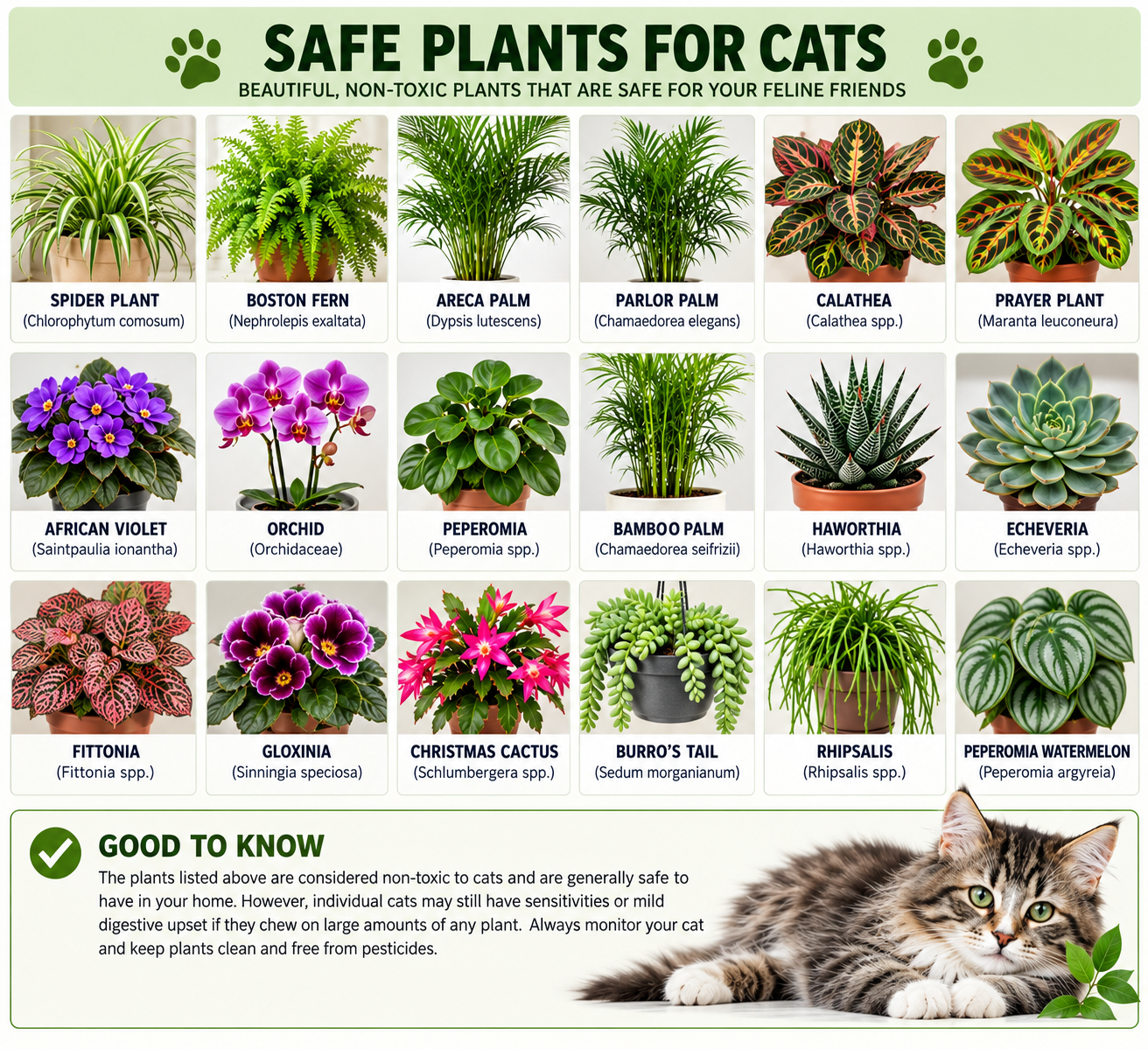
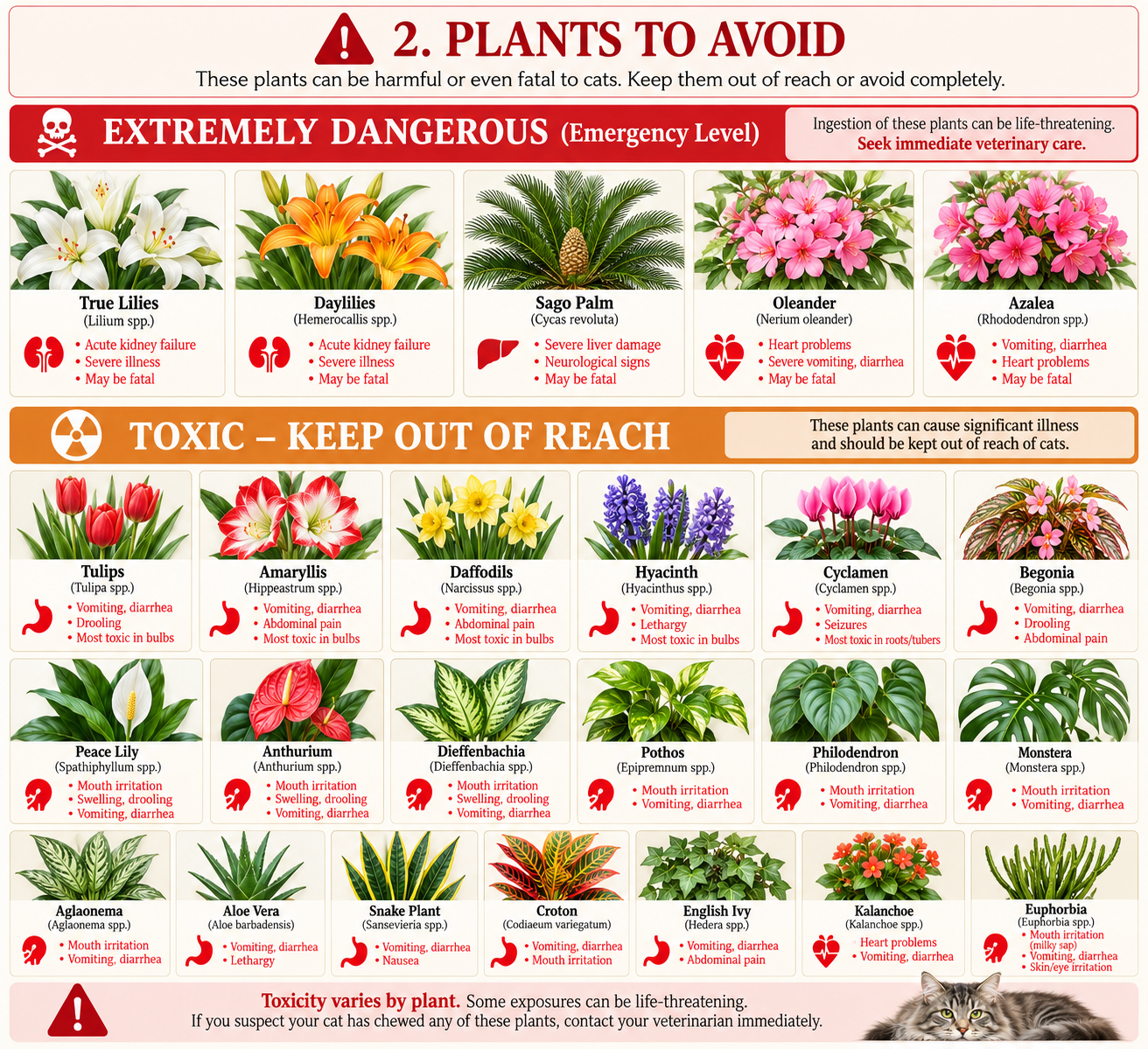
Look at every windowsill, shelf, table, hanging basket, and flower arrangement. You may be surprised to discover that some of the most common decorative plants found in homes and gardens can be harmful—or even life-threatening—to curious cats.
Maine Coons are naturally inquisitive. Their intelligence, confidence, and playful personalities encourage them to investigate everything around them. A dangling leaf, a colorful flower, or even the water inside a vase can quickly become an irresistible attraction.
Spending just a few minutes identifying potentially dangerous plants before your kitten comes home is one of the easiest ways to prevent a frightening veterinary emergency later.
A safe home is one of the greatest gifts you can offer your new companion.
Why Do Cats Chew Plants?
Many owners are surprised when their cat suddenly starts nibbling leaves.
Cats may chew plants because they are:
- curious, especially as kittens
- bored and looking for entertainment
- attracted to moving leaves
- trying to satisfy their instinct to chew vegetation
- simply exploring something new This doesn't necessarily mean your cat is lacking nutrients—it is often perfectly normal feline behavior.
What Should You Do?
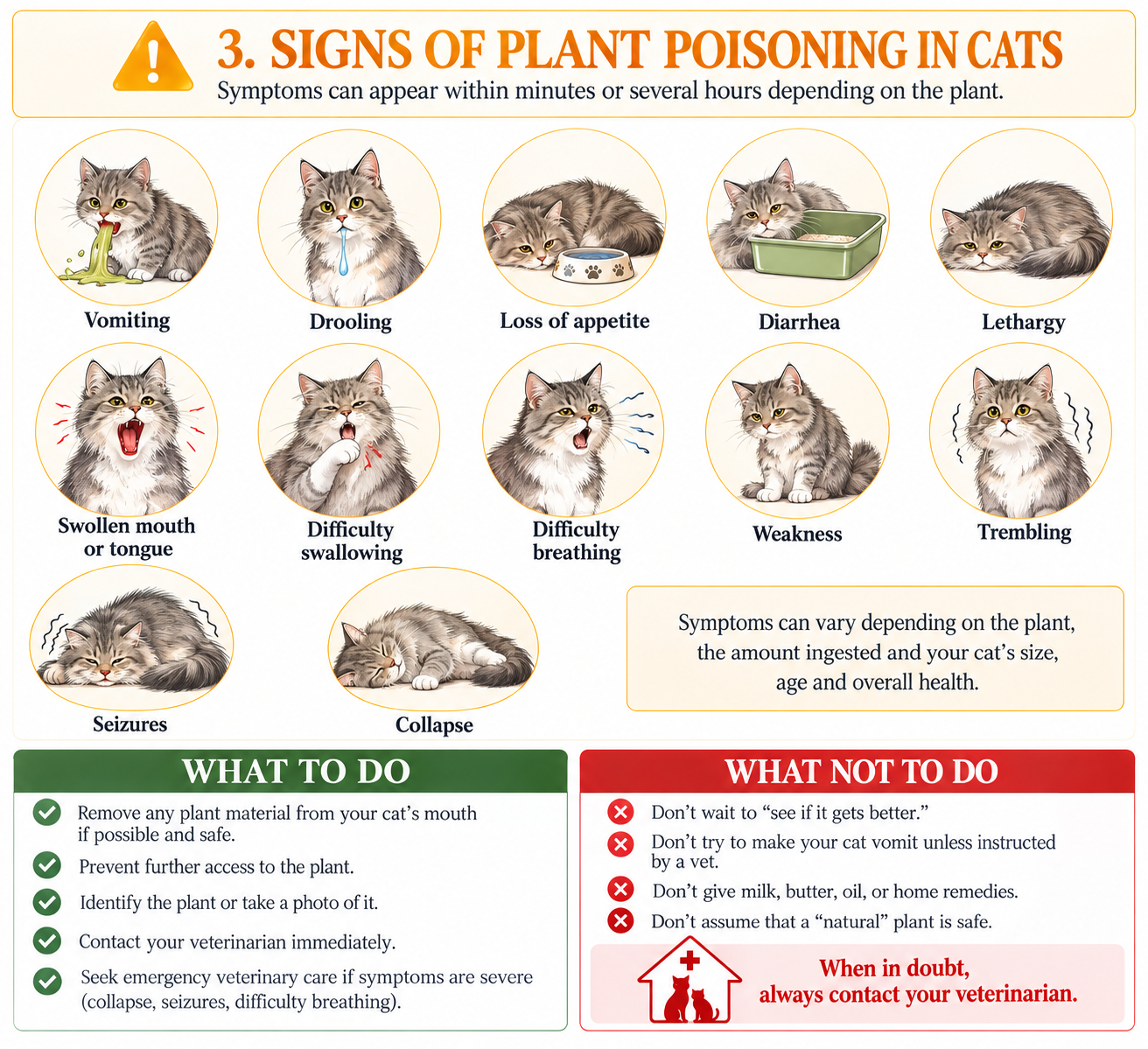
If you think your cat has chewed a toxic plant:
✅ Remove any remaining plant material from the mouth if it can be done safely.
✅ Prevent further access to the plant.
✅ Try to identify the plant or take a photo of it.
✅ Contact your veterinarian immediately.
If your cat is showing severe symptoms (difficulty breathing, collapse, seizures, or extreme lethargy), seek emergency veterinary care without delay.
What NOT to Do
❌ Don't wait to "see if it gets better."
❌ Don't try to make your cat vomit unless specifically instructed by a veterinarian.
❌ Don't give milk, butter, oil, or home remedies—they do not neutralize plant toxins and may make matters worse.
❌ Don't assume that a "natural" plant is automatically safe.
Prevention Is Always Better Than Treatment
The easiest way to prevent plant poisoning is to make your home cat-safe before your kitten arrives.
We recommend:
checking every houseplant before bringing it home
placing toxic plants where your cat cannot reach them—or, better yet, avoiding them altogether
supervising curious kittens as they explore their new home Remember that kittens often discover plants long before their owners realize they're interested in them.
Our Recommendation
At AdoraCoon Canada, we encourage every family to review the plants in their home before bringing home a kitten. Creating a safe environment is one of the simplest ways to protect your new companion.
After all, the best veterinary visit is the one that never becomes necessary.
Your Maine Coon will spend years exploring every shelf, windowsill, and sunny corner of your home. Making those spaces safe from the very beginning is one of the greatest gifts you can give your feline friend. 🐾
🌸 Did You Know?
Many cat owners believe that if a cat doesn't eat plants, there is nothing to worry about. Unfortunately, that's not always true.
Some cats simply chew a leaf out of curiosity. Others rub against flowers and later groom pollen from their fur. Even drinking water from a vase containing toxic flowers may expose a cat to dangerous substances.
That's why prevention is always safer than treatment.
